









- One sided adhesive tapes
- Packing tapes
- Coloured - marking tapes
- Electrical tapes
- Office tapes, adhesive tapes
- Slick surface tapes
- Metal adhesive tapes
- Masking crepe tape
- Masking special tapes
- Surface protection tapes
- Foam - sealing tapes
- Anti-slip tapes
- Self-adhesive rubber cut-outs
- Special tapes
- Textile tapes
- Warning and reflective tapes
- Double-sided adhesive tapes
- Electrical insulation material
- Glues
- Flexible stoppers, bumpers
- Velcro straps
- Primers - activators - cleaners
- Accessories for adhesives, applicators
Printer security should not be underestimated in companies
Printers have been a common part of every business or company for several years. Hundreds of employees use their services every day in the course of performing their work duties. However, business entities do not always fully realize the security risks associated with printers. Printer security is therefore minimal or insufficient in many cases, as evidenced by the results of several surveys.

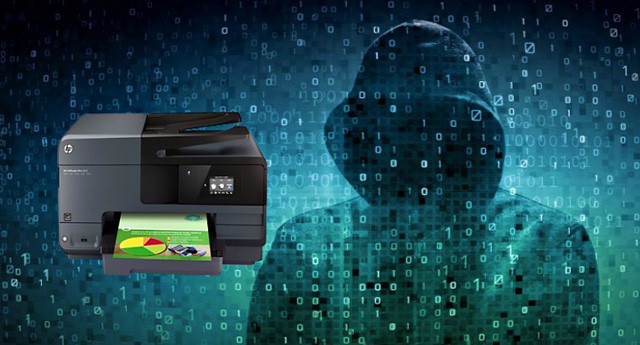
Protection of security, or rather, printer security and the elimination of security risks are currently probably one of the greatest challenges faced by almost all companies. This is all the more true when 25. In May, Regulation (EU) 2016/679 of the European Parliament and of the Council, known by the abbreviation GDPR (General Data Protection Regulation), entered into force.
In practice, this means that business entities and companies that work with personal data will have to adopt additional measures to increase the protection of this data. But let's get back to printer security. It applies to all companies regardless of whether they work with personal or sensitive corporate data.
Risks of an unsecured printer
As a result of the increasingly frequent use of mobile applications and the growing number of employees and devices connected to the network, the risk of a printer being attacked by dangerous malware is increasing.This malicious software can damage, block, or steal data stored in the device's memory. From this point of view, the printer’s most important function is therefore the ability to detect potential data threats.
The survey also showed that, in addition to company management, sales departments or human resources departments are among the most at risk. And it is precisely the data of these printers that are often weakly protected against malware, or they often become the most vulnerable link even in the case of unauthorized access via Wi-Fi technology or through unsecured ports.
It is necessary to invest in security
Companies most often invest in the security of corporate laptops or desktop computers, which is why the situation regarding the protection of confidential information on these devices is somewhat better. The printer's security also deserves the same attention and investment.
The first step for companies that process personal data or work with the aforementioned confidential information should be a thorough analysis of the documents and data used, the setup of external procedures, and employee training.
According to several surveys, familiarizing employees with security risks and training them is on the periphery of companies' interest, while many firms do not even have any policies in place for protecting devices connected to the network. For this reason, printer security in these companies is practically at a minimal level, or the data stored in the device's memory is not protected against unauthorized access at all.
Printer security is offered, for example, by HP
In addition to the measures mentioned, HP printers provide a solution and rank among the most secure devices on the market. Of these, especially the LaserJet Enterprise product line, which, thanks to its security features, oversees printer security and protects companies' devices and their data from dangerous cyberattacks.
Among these features, we can mention the Whitelisting function, which verifies the recipient and allows only a known file to be uploaded or executed. You can also highlight the HP Sure Start feature, which is capable of detecting potential cyberattacks on the BIOS. But that's not all. After a malware attack, implementing the same BIOS security will also ensure subsequent automatic recovery. And we will not overlook Run-time Intrusion Detection either. This feature enables monitoring of cyberattacks in the device's memory and was developed in collaboration with Red Balloon Security, a company that specializes, among other things, in the security of network-connected printers.